ibm
Interactive microapps for IBM's sales and field-marketing teams: event invitations, recaps, and follow-ups built as branded pages that open anywhere and report back on what got read. One link instead of an attachment.
IBM runs events constantly: Think, studio sessions, exhibitions, internal briefings. Every one needs an invitation that earns the RSVP, a recap that keeps working after everyone flies home, and a follow-up a rep can send while the conversation is still warm. Slide decks die as attachments. Add IBM's brand governance, which leaves no room for improvisation, and an events calendar that moves faster than any design queue, and the brief writes itself: on-brand, interactive, and fast.
Each piece is an interactive page rather than a file: one link, fully in IBM's brand, that opens on whatever screen the recipient is holding and reports back on which sections were actually read. The Think 2026 recap distills the week into five announcements a rep can forward the same day. The IBM and Scuderia Ferrari partnership piece opens like a film, then unfolds into the case study, the business outcomes, and the IBM solutions behind them, three threads through one page.

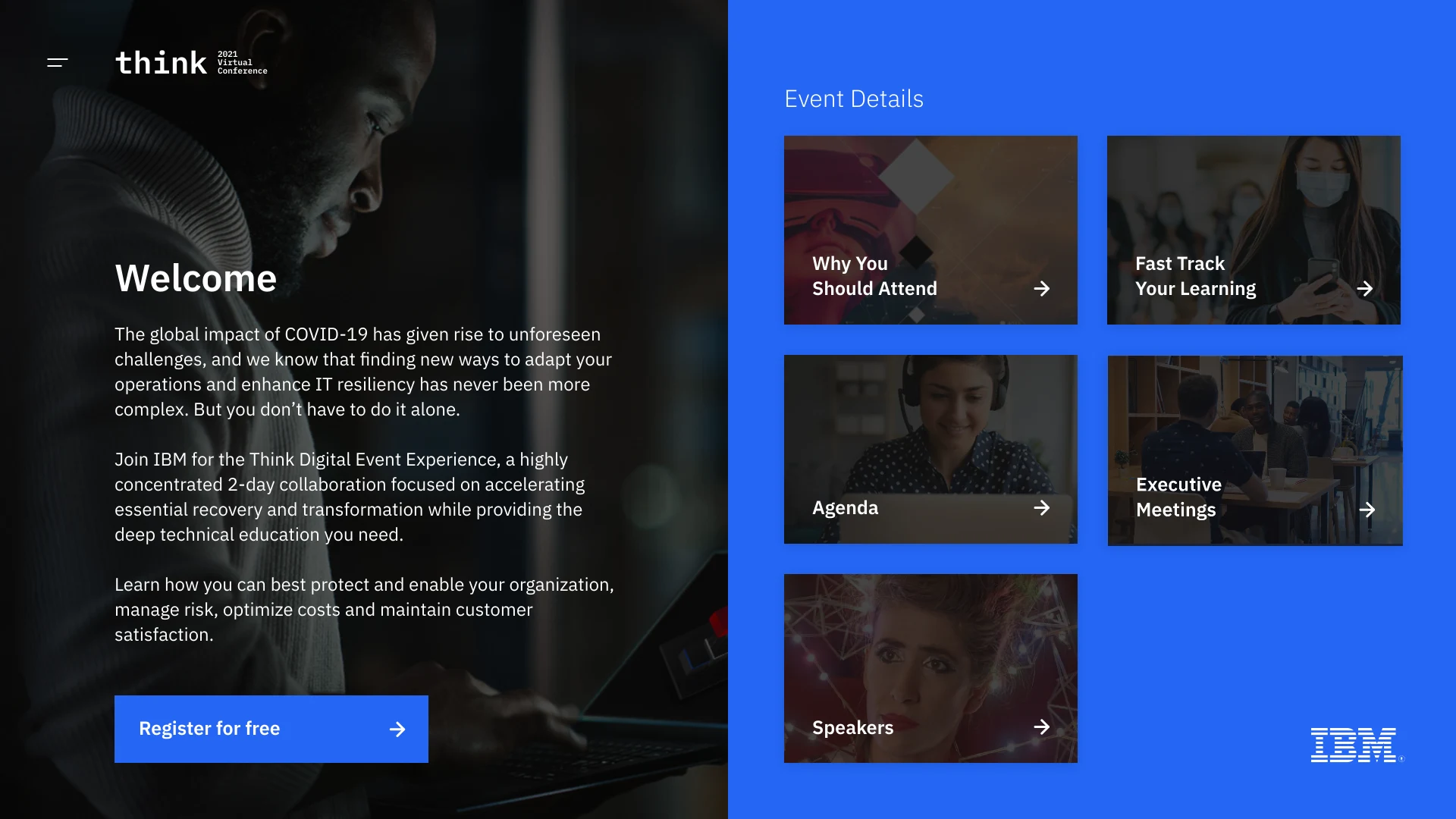
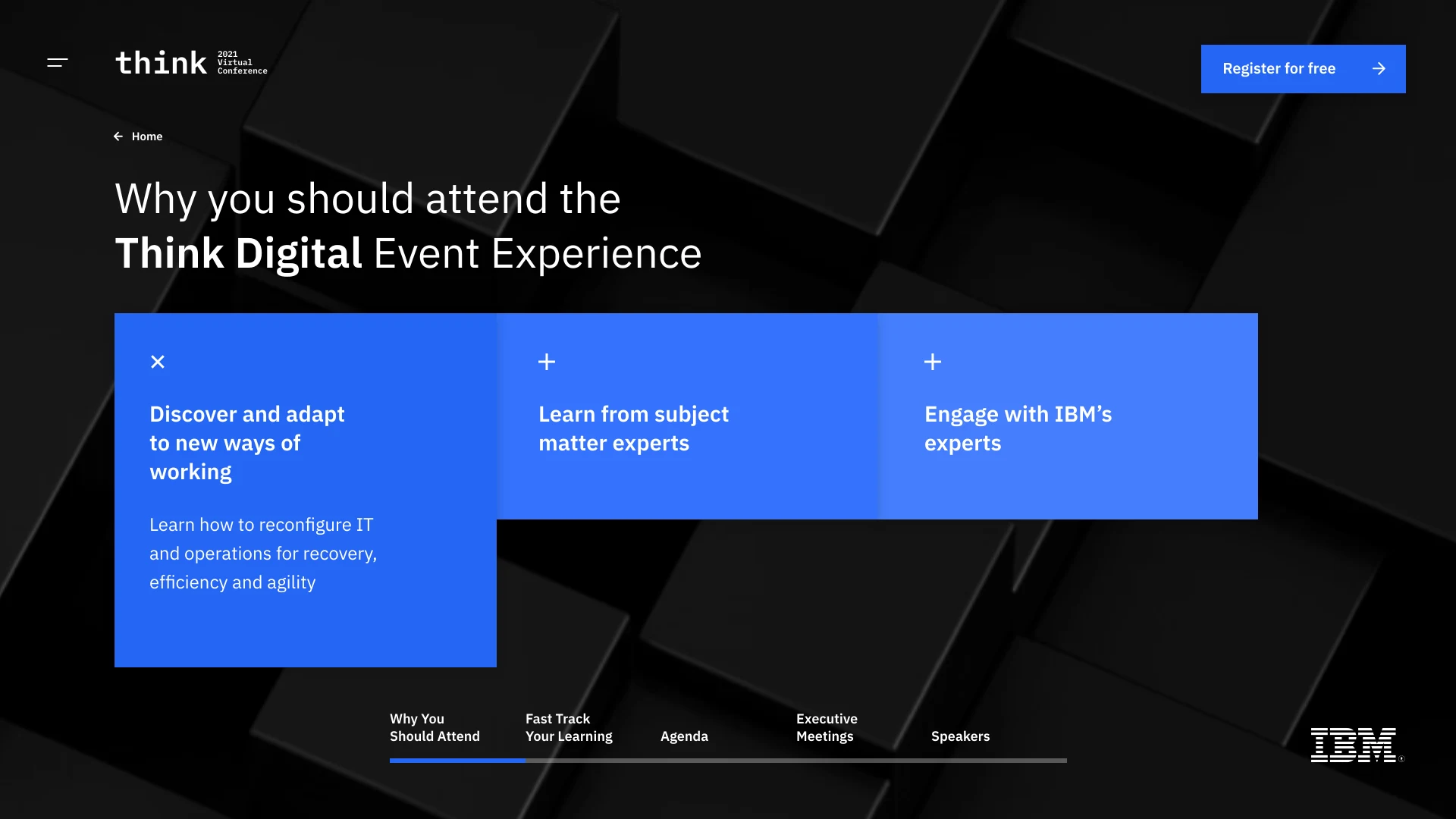
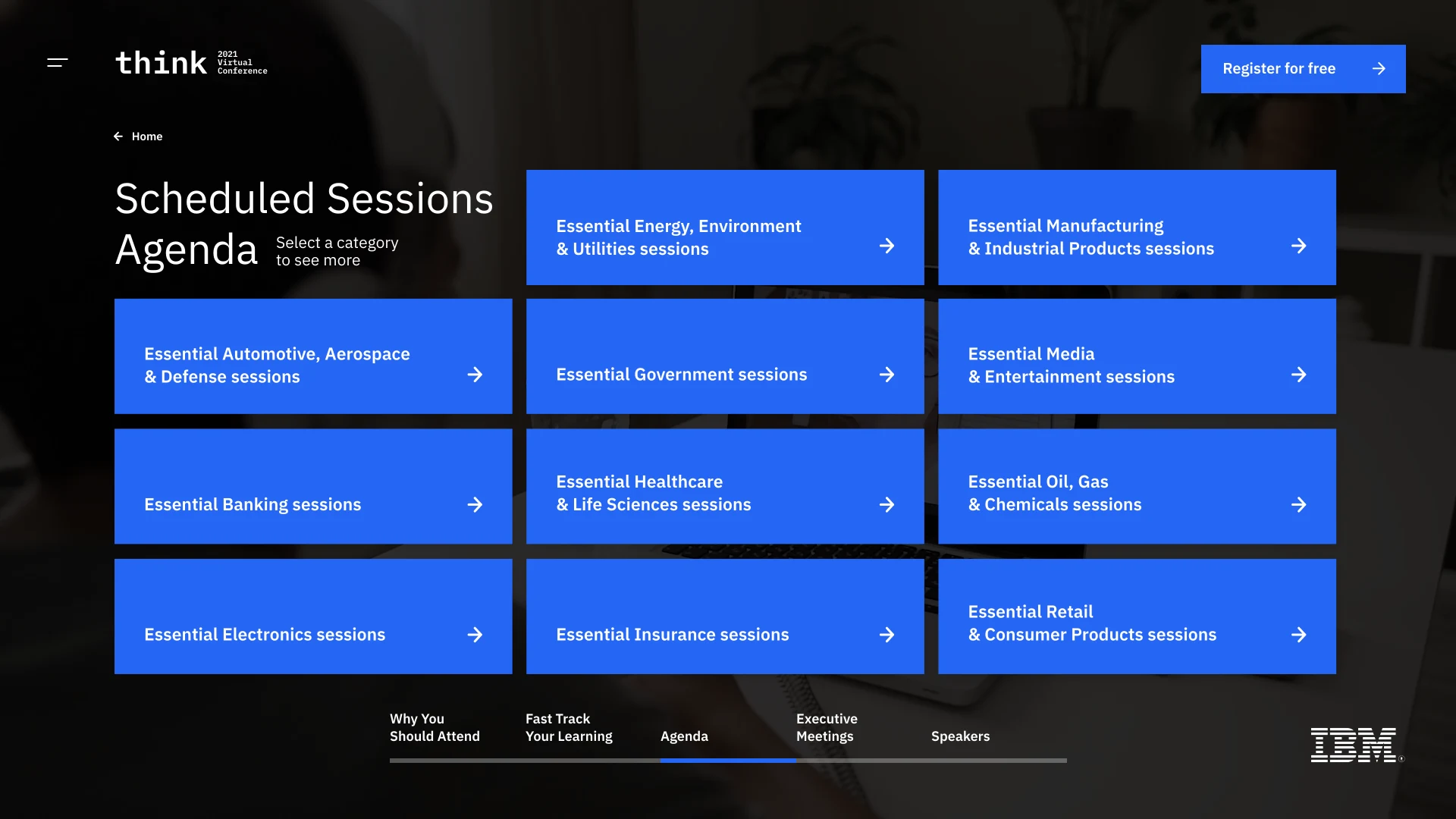
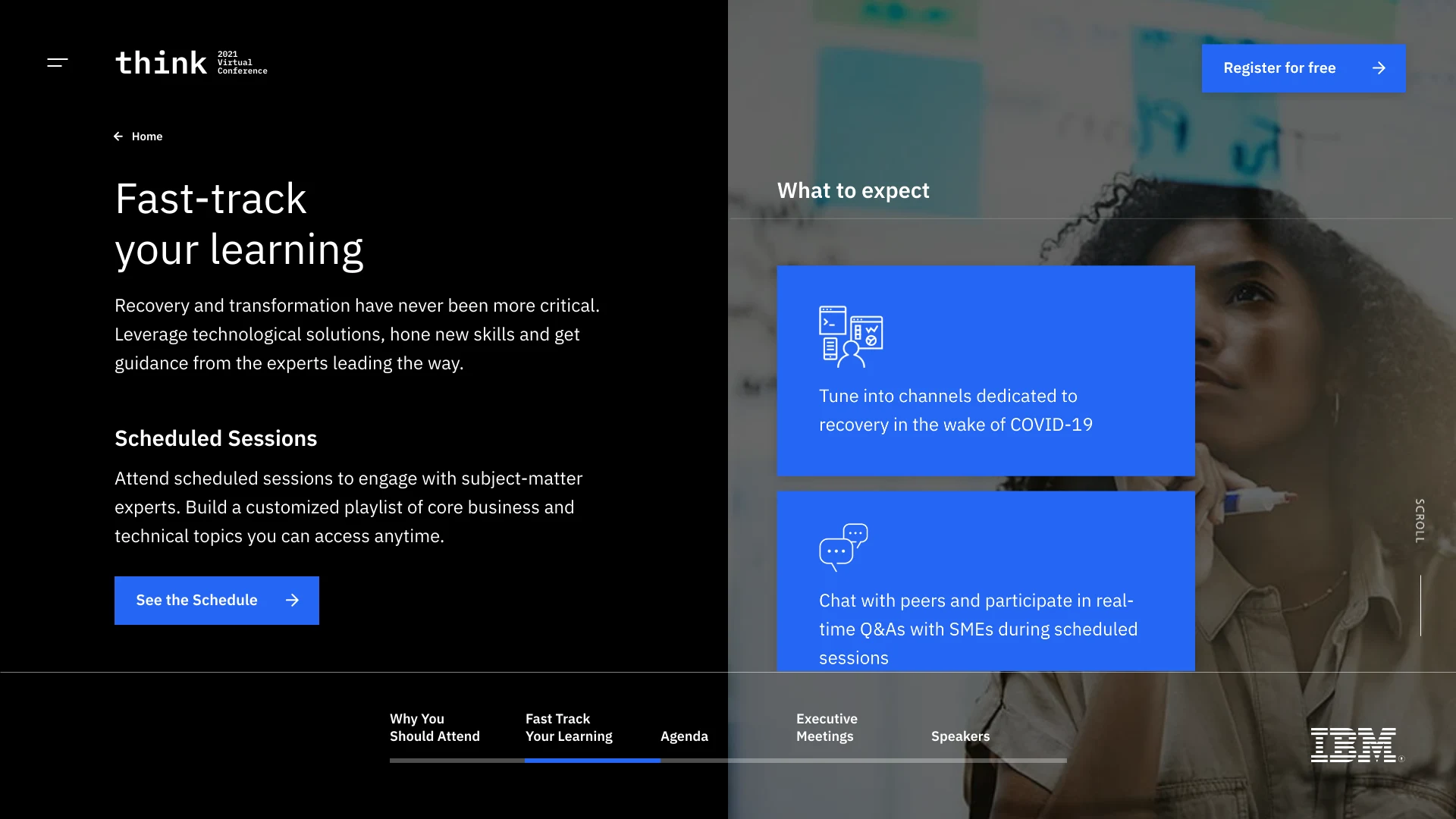
The whole operation runs on a weekly loop I managed as project manager and production designer, working closely with Sebastian Huynh, IBM's design lead. Content decks arrive Monday. We produce through the week inside IBM's design language, down to the grids. Sebastian reviews, we deliver by the next Monday, and he distributes to the sales teams that asked. Same rhythm, every week. The pieces that earned it graduated into a template library published through Seismic, where IBM's field marketers now start from a built page instead of a blank one, no Bridger required.
- 250%
- more engagement than the slides they replaced
- 7×
- the ABM team's content output, quarter on quarter
- 1,000+
- pieces launched from the template library
The numbers tell two stories. The engagement lift says the format works: people read pages they would never have opened as attachments. The output numbers say the system works: once the templates existed, IBM's own marketers could produce at a pace no agency retainer could match. The best outcome we made is the one that stopped needing us.
Production design is a real design discipline, and this project is where I learned its shape. The craft isn't inventing a new visual language; it's holding one of the world's strictest brands steady while shipping at the pace of an events calendar, every Monday, without a miss.