froot
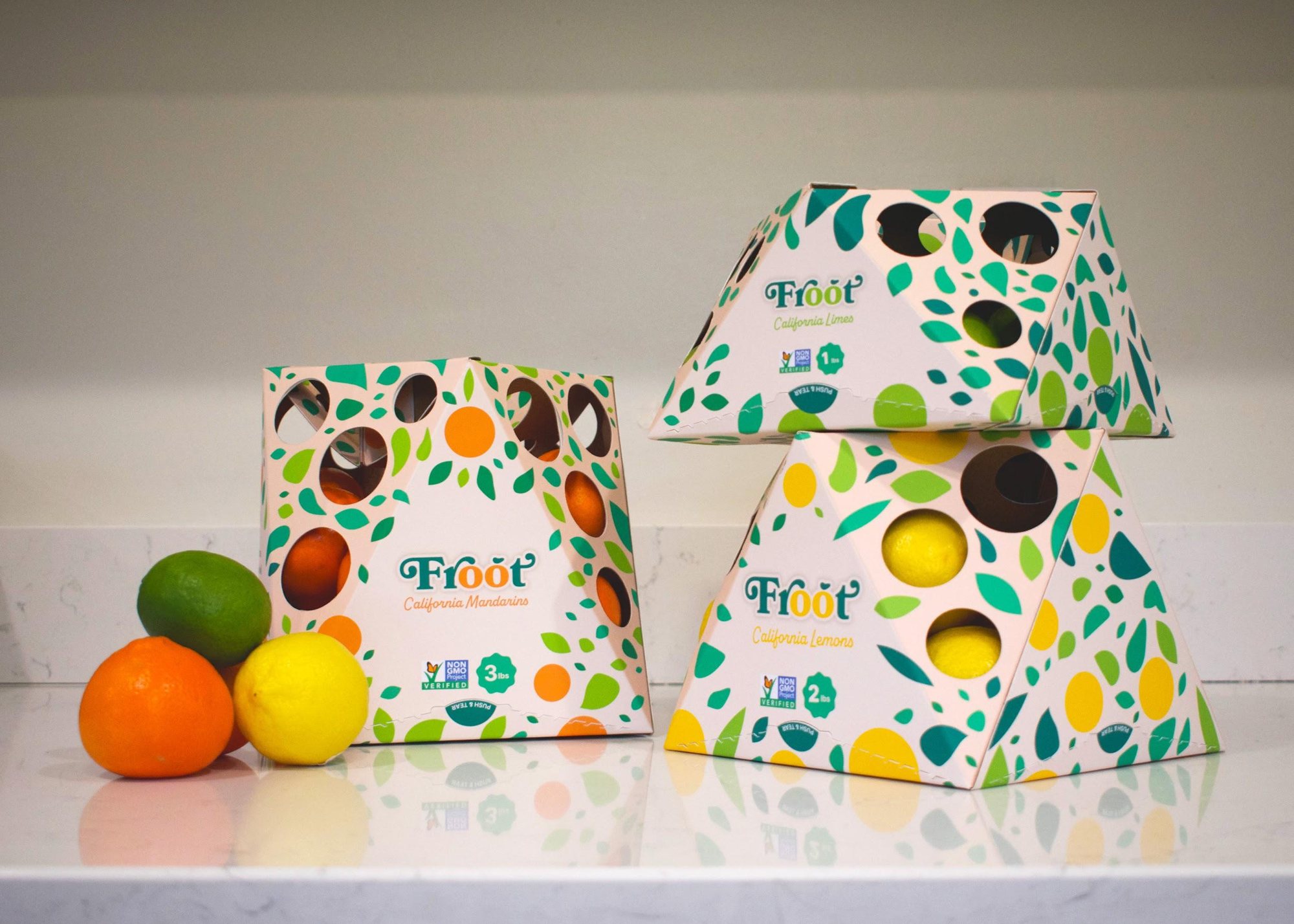
Froot is a conceptual citrus brand built to replace plastic mesh bags. One die-cut piece of paperboard carries mandarins, lemons, or limes home, then tears open into a fruit bowl.
- 52%
- of fresh fruit is packaged in plastic
- ~10%
- of plastic bags, sacks, and wraps get recycled
Citrus is the usual suspect: mesh bags that hold the fruit for one trip home and then go straight in the trash. For the Paperboard Packaging Alliance's 2022 Student Design Challenge, the brief was to replace them with recyclable paperboard that adds real value for shoppers and stores, with zero plastic anywhere, shipper included.
We started with interviews. Almost everyone said they want to see the fruit before they buy it. People were frustrated that mesh bags fall apart once opened, offer no support, and can't be recycled. But they also liked how simple the bag is, and worried that a clever box would be confusing to open. That gave us three rules: keep the fruit visible, keep it contained after opening, and make opening obvious.
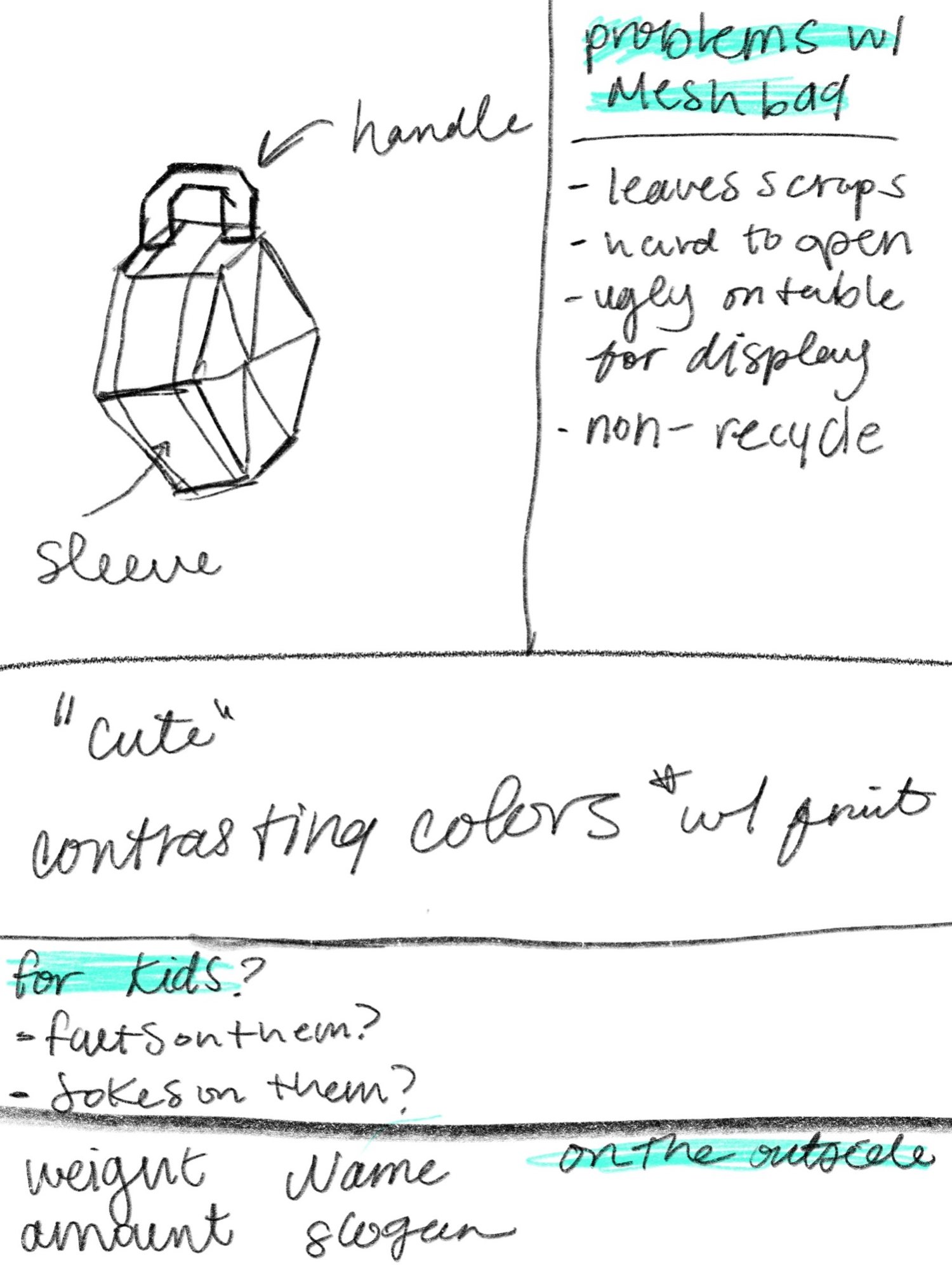
I was one of three graphic designers, working alongside three structural designers. We sketched through shapes, handles, and sleeves, then built rough prototypes in gray board and masking tape to test the form, the cutouts, and how the top closes.
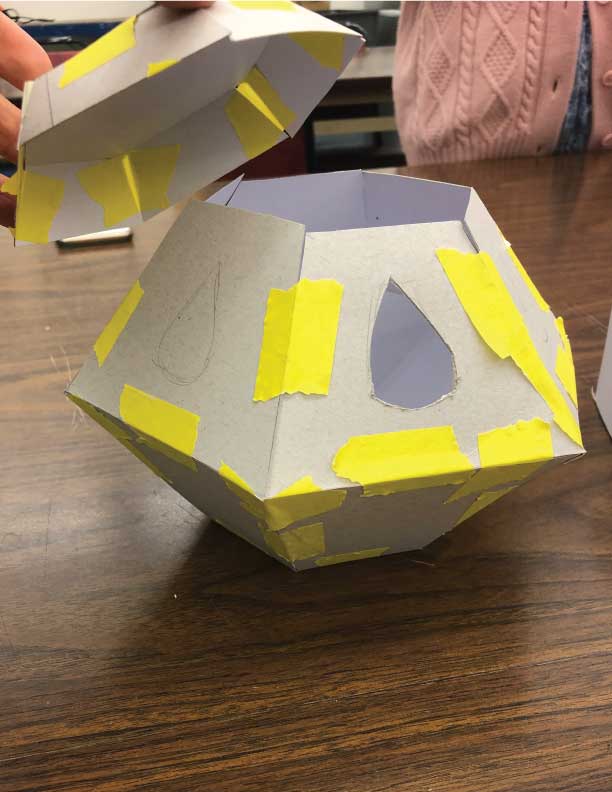
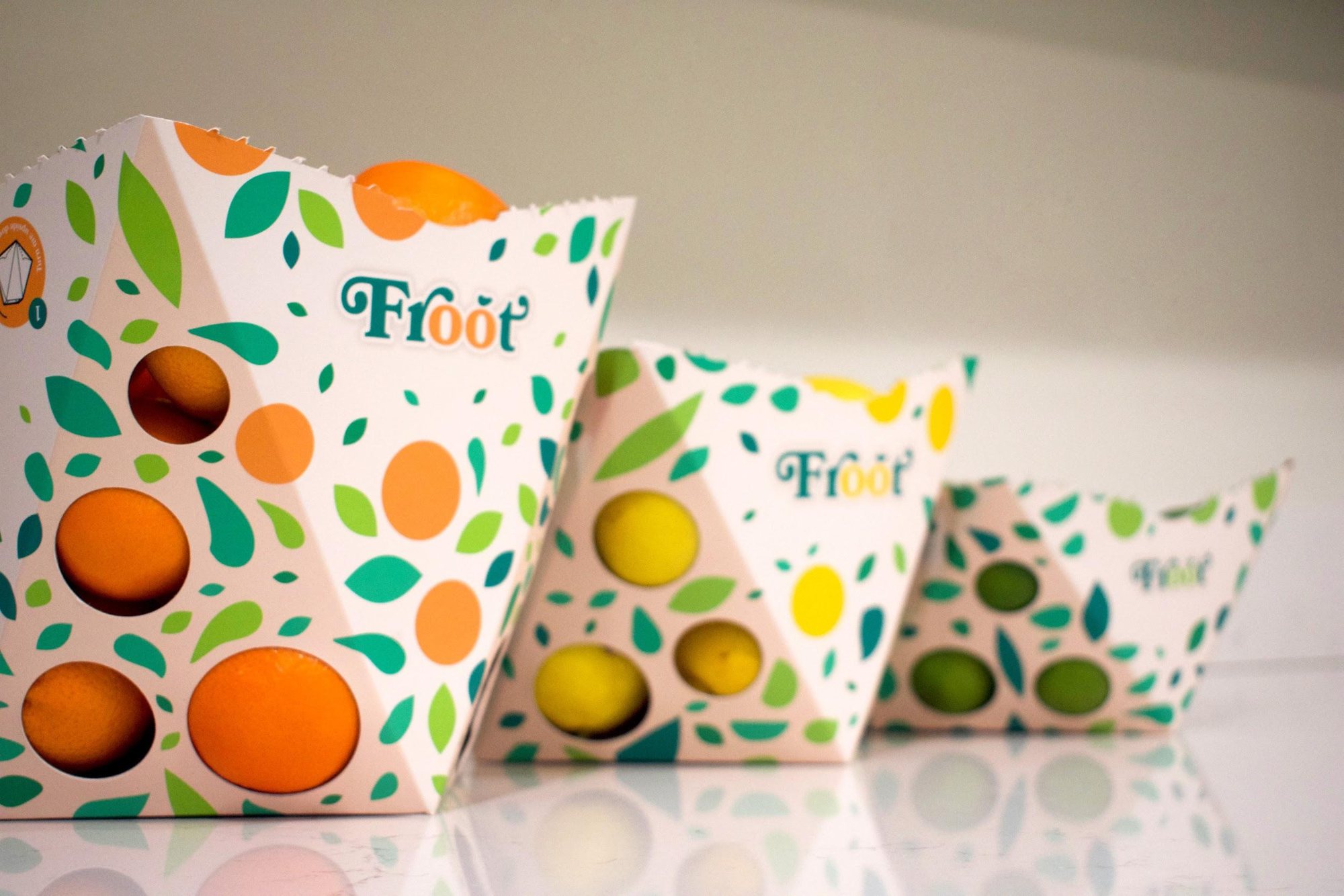
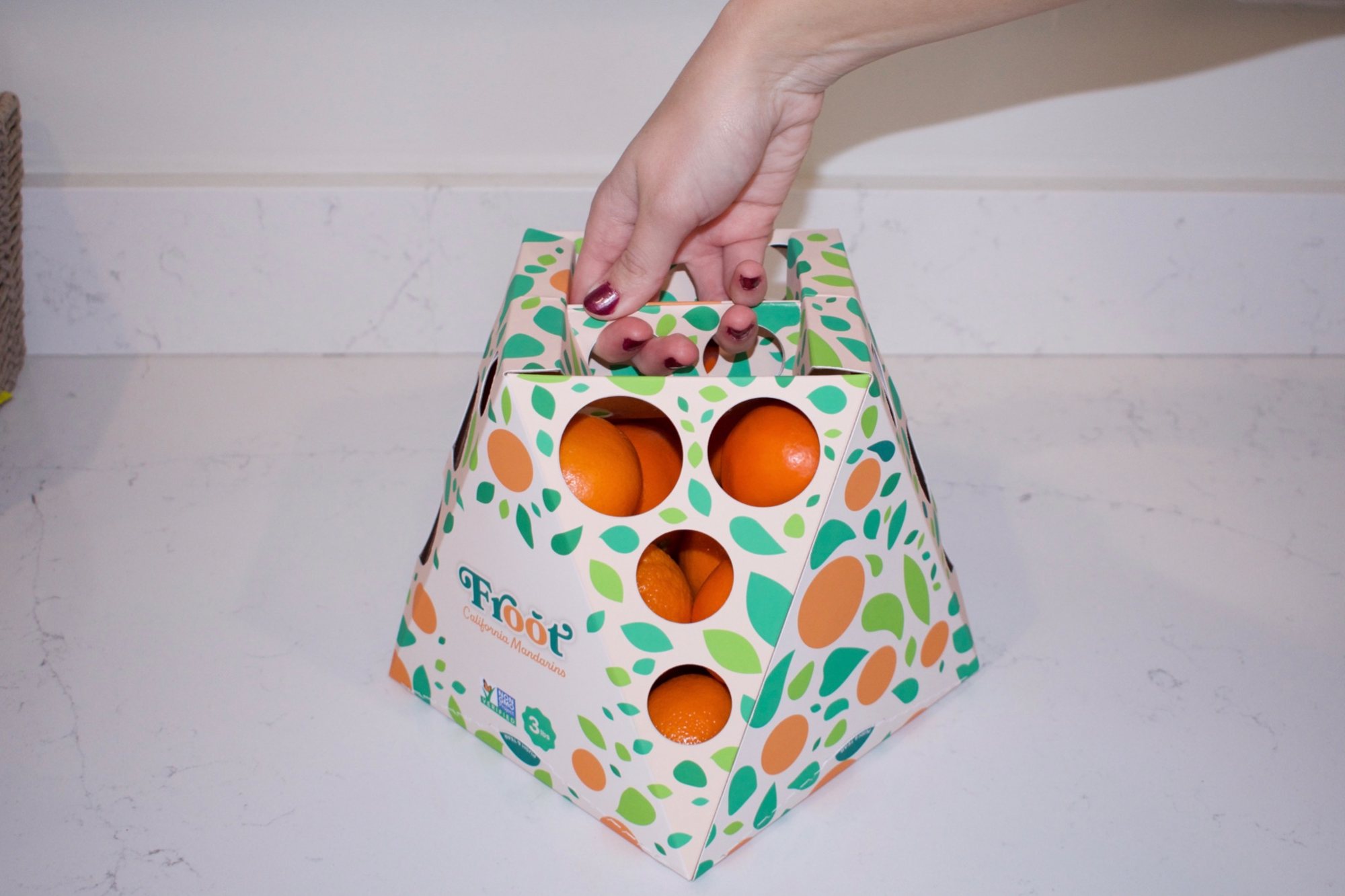
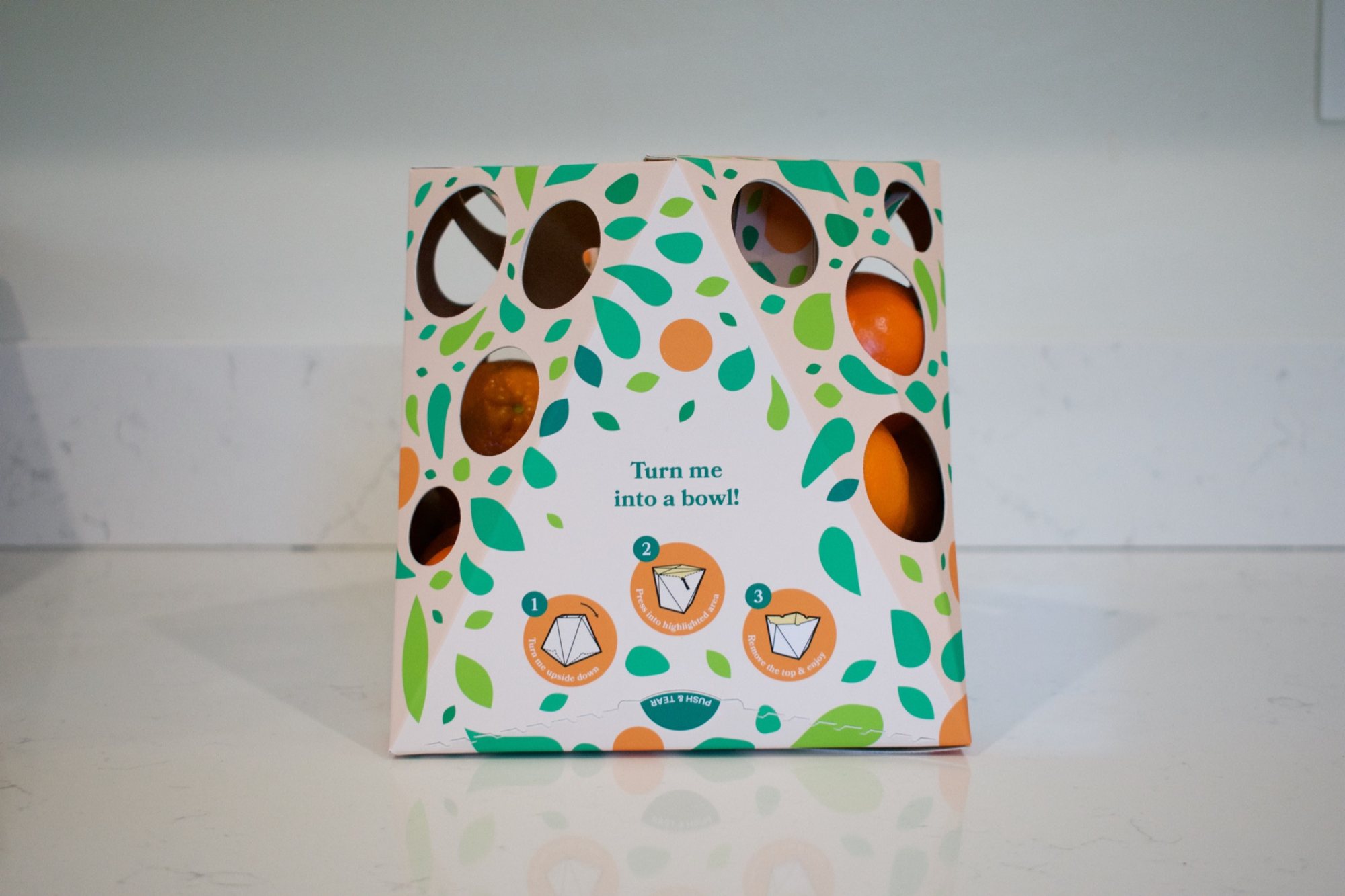
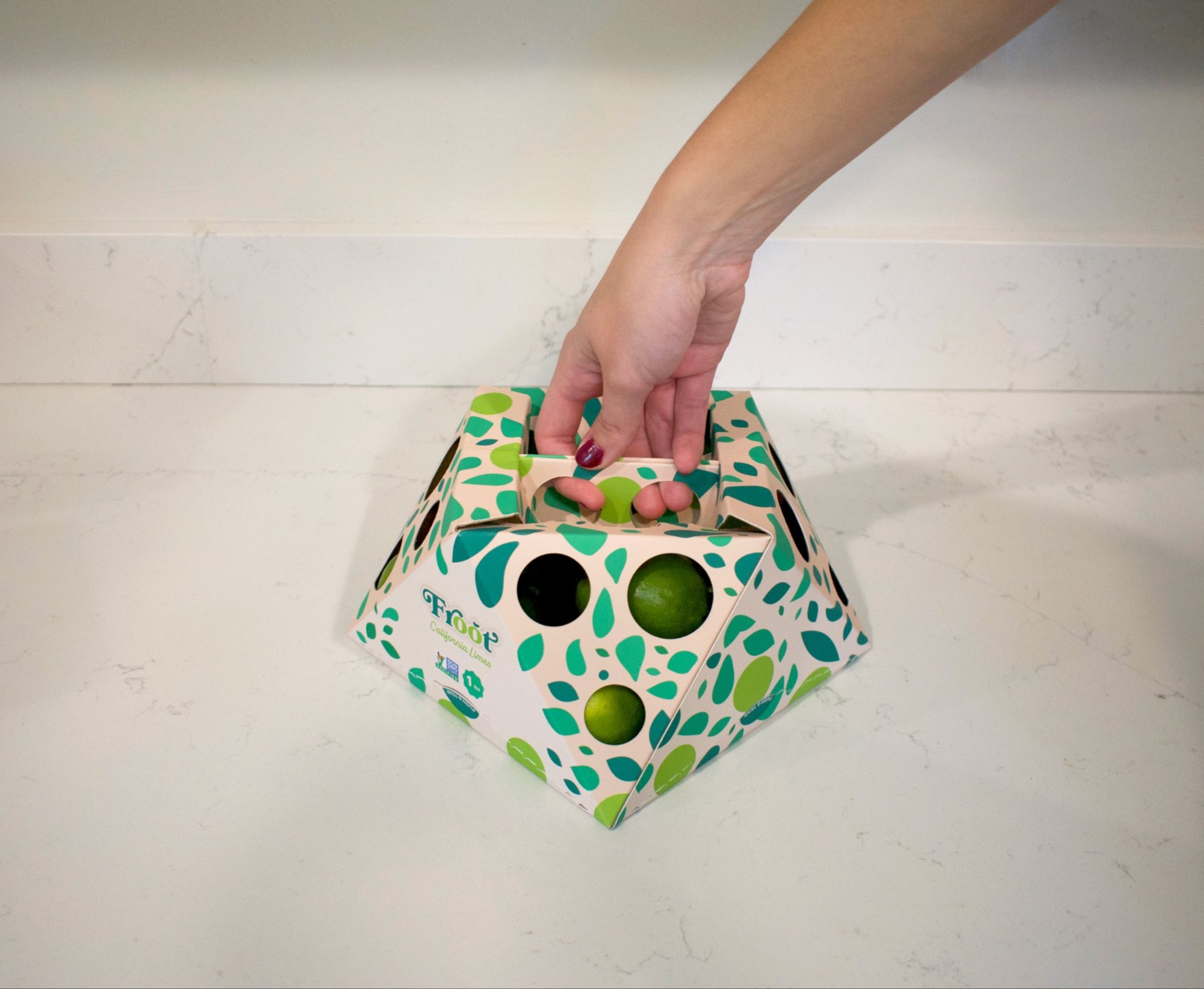
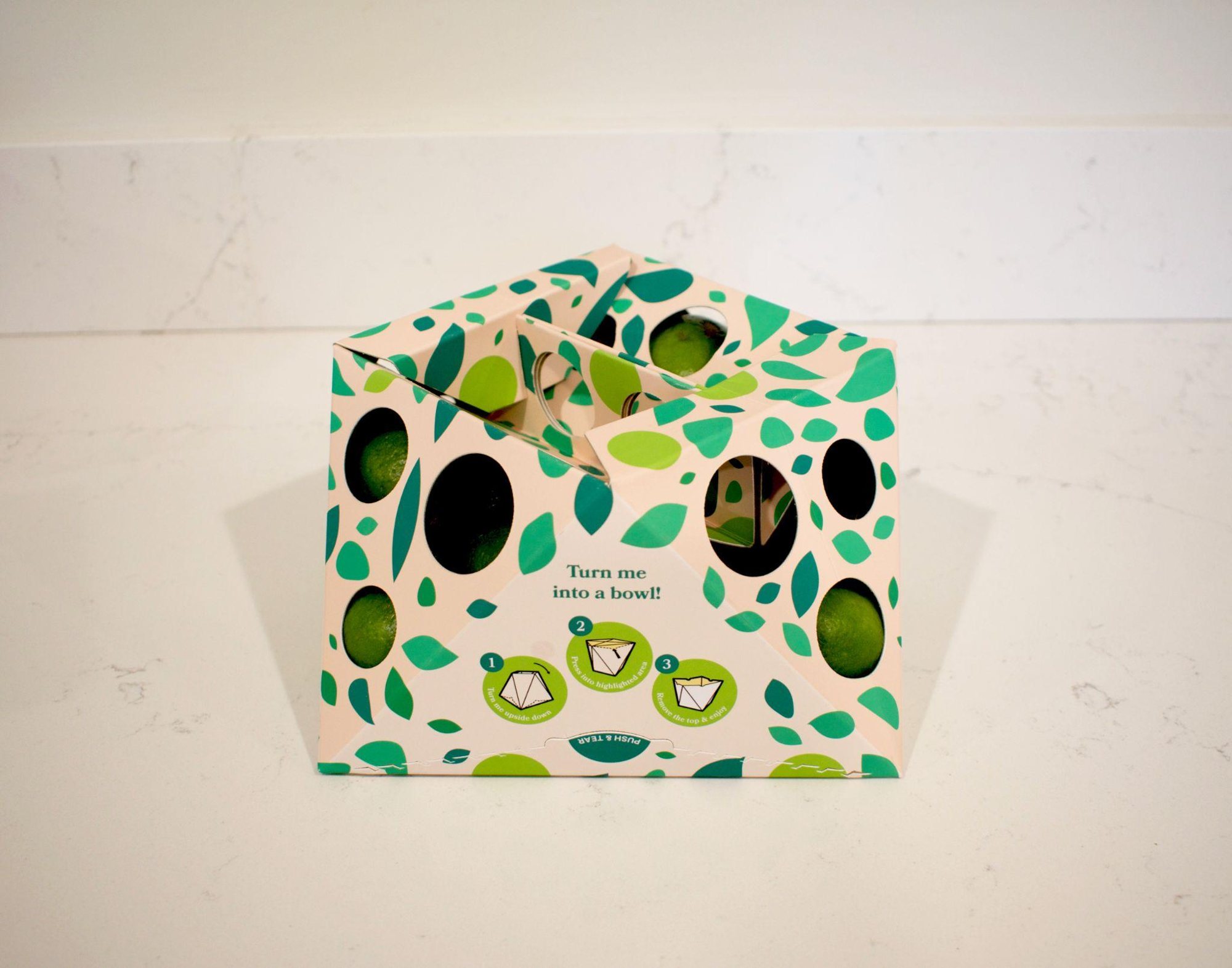
Cutouts let shoppers check the fruit before they buy. A recessed handle carries it home without breaking stackability, and the stackable shape keeps shelves tidy and the fruit better protected than in a bag. After purchase, a perforation turns the carton into a bowl, with a small "Turn me into a bowl" guide printed right on the box. The line comes in three sizes: 3 lbs, 2 lbs, and 1 lb.
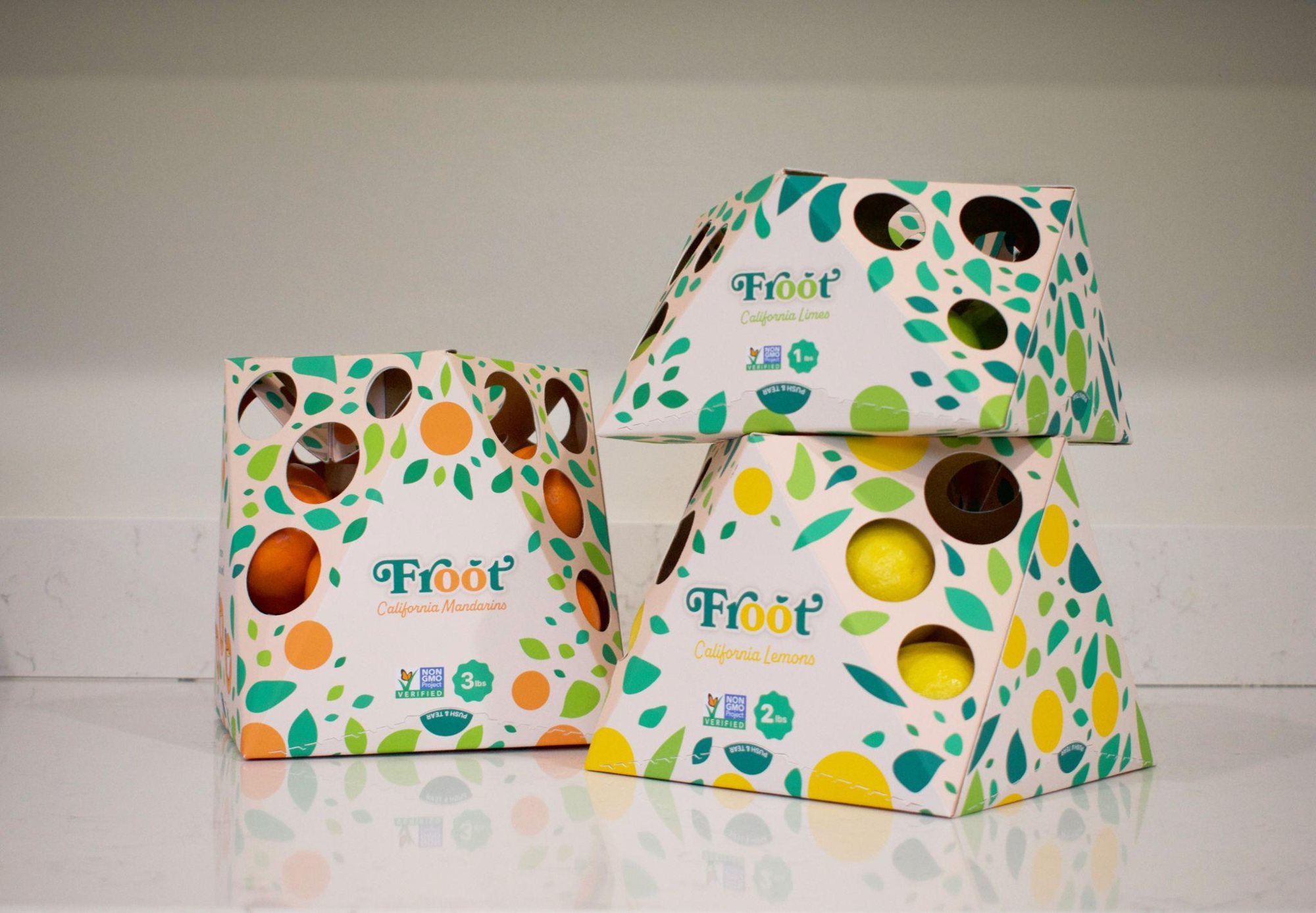
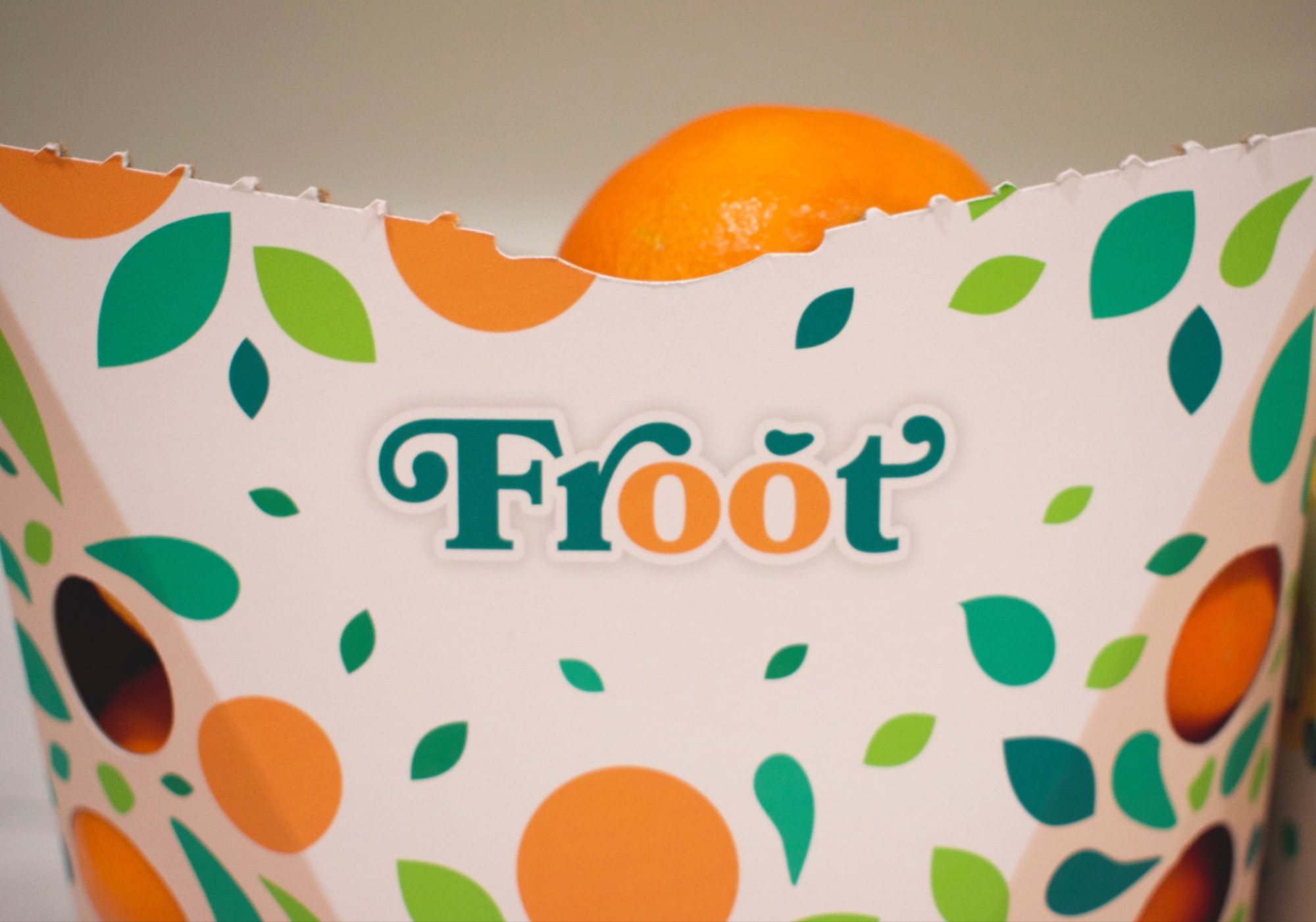
Froot had to stand out in an aisle full of Cuties, Halos, and Sunkist. We explored names like Roots, Califruit, Fruta, and Frsh before landing on Froot, then worked through type studies, color schemes, and pattern ideas. The final wordmark swaps its two o's for fruit, and a scattered leaf-and-fruit pattern wraps every face so the cutouts read as part of the illustration instead of holes punched into it. Each fruit gets its own palette, so the line reads as one family while every box stays easy to spot.
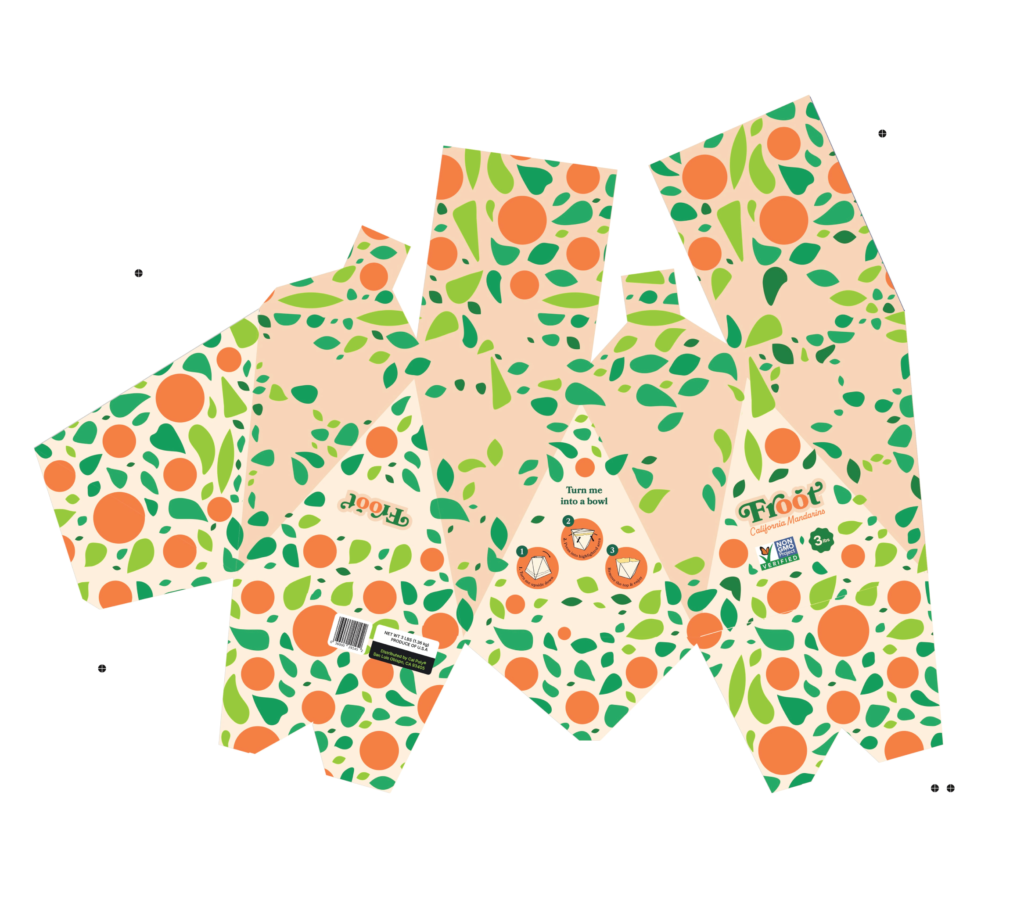
Each carton is die cut from a single piece of paperboard, with integrated cutouts, an auto-bottom, and glue tabs, and it folds flat after gluing. Each size has its own dieline: 20.61 x 26.55 in for mandarins, 19.19 x 26.55 in for lemons, and 16.95 x 25.14 in for limes, all laid out for 18 pt SUS paperboard and offset lithography.
Three fruits, one system: each carton comes home by its handle, then tears open into a bowl.
- Top 3
- finalist, PPA Student Design Challenge 2022
Froot made the final three of the Paperboard Packaging Alliance's 2022 Student Design Challenge, and we presented it at the Paperboard Packaging Council's 2022 Fall Meeting & Leadership Conference. The same system can stretch to other fresh produce as an alternative to mesh bags, plastic bags, and plastic clamshells.
Packaging is a product you hold. Working beside structural designers taught me that graphics and structure have to be designed together: every cutout, fold, and tear line changes where the brand can live on the box.